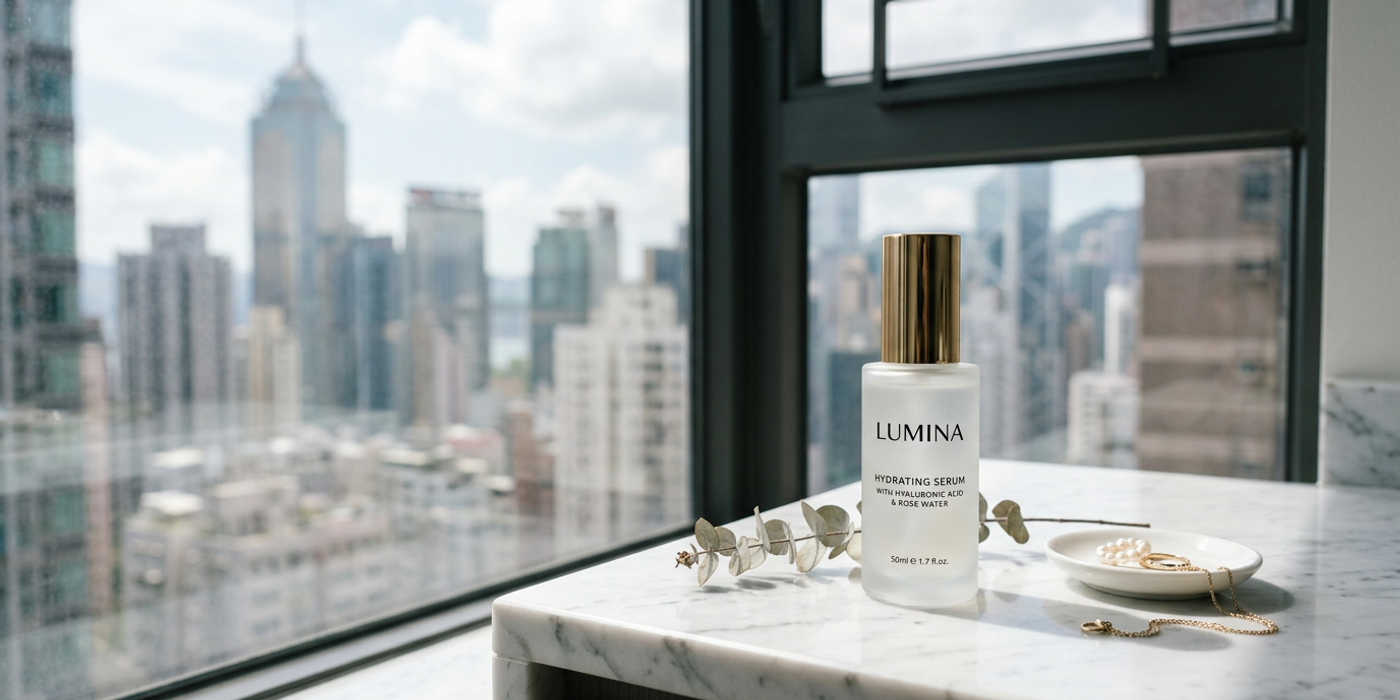
Discover how Hong Kong brands use AI image generation for e-commerce in 2026 — product photography, model shots, and catalog images at a fraction of the cost.
As a Hong Kong e-commerce brand, your product images are often the first thing potential customers see — and the difference between a click and a scroll-past. In a city where online shopping competition is fierce, AI image generation has become a practical, cost-effective solution for producing high-quality visual content without the studio overhead.
Whether you sell fashion, electronics, beauty products, or food, AI image generation can transform how you create product photography, model shots, and catalog images. Here's what Hong Kong brands need to know in 2026.
Why AI Image Generation Matters for Hong Kong E-Commerce
Hong Kong's e-commerce market has never been more competitive. With platforms like HKTVmall, Carousell, and cross-border channels like Taobao and Shopee dominating the landscape, brands need visually compelling product listings to stand out.
Traditional product photography in Hong Kong comes with significant costs. A single-day studio rental in Wong Chuk Hang or Kwun Tong can cost HKD 5,000–15,000. Add a professional photographer, stylist, retoucher, and model fees, and even a small product shoot can run into six figures. For brands launching new products weekly, this quickly becomes unsustainable.
AI image generation changes the math entirely. With tools like Cooly Studio, you can generate studio-quality product images in minutes — often for a fraction of a cent per image. The technology has matured to the point where AI-generated product photos are often indistinguishable from traditional photography, especially for e-commerce listing purposes.
Key Use Cases for Hong Kong Brands
Product Photography Without a Studio
The most immediate application is product photography. Instead of booking a studio and coordinating lighting setups, you can generate product shots with consistent, professional lighting from your desk.
Upload a reference image of your product, describe the desired setting — "white marble background with soft natural lighting" or "urban Hong Kong street scene at golden hour" — and let the AI produce usable images in seconds. This works particularly well for consumer electronics on clean backgrounds, beauty products with consistent branding, food and beverage items styled for social media, and fashion accessories in lifestyle contexts.
The key advantage is iteration speed. Want to see your product on five different backgrounds? That's five generations, not five separate studio setups.
AI Model Photography Without Models
For fashion and apparel brands, model photography is one of the biggest ongoing expenses. AI image generation now makes it possible to show clothing on realistic AI-generated models — in any pose, any lighting, any setting.
You can generate diverse model representations without casting or scheduling. Need to show a winter coat on a model in a snowy landscape for your European market expansion? A single prompt generates it. This capability has been a game-changer for Hong Kong fashion brands looking to scale their visual content across multiple markets without multiplying production costs.
Catalog Image Generation at Scale
The real ROI comes at scale. AI image generation tools can produce hundreds of on-brand product images in a single batch, maintaining consistent style, lighting, and composition across an entire catalog.
For Hong Kong brands with large product inventories — electronics retailers, beauty multi-brand stores, or F&B chains with dozens of menu items — this is transformative. A full catalog that previously took weeks of studio time can now be done in hours.
How to Get Started with AI Image Generation
The barrier to entry is low. Here's a practical workflow for Hong Kong brands:
1. Choose your tool. Cooly Studio offers models optimised for different use cases — Seedream 4 for photorealistic product shots, Nano Banana 2 for fast iterations, and Flux Schnell for quick concept exploration.
2. Prepare reference images. Take a few clean photos of your product from different angles. These serve as the foundation for AI accuracy.
3. Write clear prompts. Describe the setting, lighting, camera angle, and mood. Example: "A minimalist white ceramic mug on a dark oak table, soft window lighting from the left, overhead angle, professional product photography style."
4. Iterate and refine. Generate multiple variations and tweak prompts based on results. Iteration has near-zero cost with AI.
5. Batch produce. Once you've dialled in your prompt and model settings, scale up to generate your full catalog.
Cost Comparison: Traditional vs AI Product Photography
| Scenario | Traditional Photography | AI Image Generation | |----------|----------------------|-------------------| | Single product shot (studio) | HKD 1,500–5,000 | < HKD 1 | | 50-product catalog shoot | HKD 50,000–150,000 | < HKD 50 | | Model + studio (full day) | HKD 10,000–30,000+ | < HKD 5 | | Re-shoot or style change | Full studio cost again | Instant, zero cost |
The savings compound with every product line update, seasonal collection launch, or A/B testing cycle. For Hong Kong brands operating on tight margins in a high-rent economy, this isn't just convenient — it's strategic.
A Note on Quality and Authenticity
AI-generated product images have improved dramatically. Models like Seedream 4 and Nano Banana 2 produce images at up to 2K resolution with realistic textures, accurate reflections, and natural lighting. For e-commerce listings, the quality gap between AI-generated and traditionally photographed images is effectively closed.
That said, authenticity still matters. Hong Kong consumers are sophisticated shoppers who value trust. Use AI-generated images for standard catalog listings, hero shots, and lifestyle contexts — but consider keeping traditional photography for hero campaigns where brand positioning demands absolute originality.
The winning strategy for most Hong Kong brands is a hybrid approach: AI for scale and efficiency, traditional for premium hero assets.
Frequently Asked Questions
Q: Can AI-generated product images really look professional enough for e-commerce? A: Yes — in 2026, AI models like Seedream 4 and Nano Banana 2 produce photorealistic results suitable for e-commerce. For most categories, AI-generated images are indistinguishable from studio photography on a mobile screen.
Q: How much does AI product photography cost compared to traditional? A: AI-generated images cost a fraction of a cent each on Cooly Studio, compared to HKD 1,500–5,000 per shot in a traditional Hong Kong studio. A 50-product catalog costs under HKD 50 with AI versus HKD 50,000–150,000 traditionally.
Q: Can I use my own product photos as reference images? A: Yes — most AI tools including Cooly Studio support reference image upload. Uploading clean product photos from different angles helps the AI maintain accurate shapes, colours, and details.
Q: Is AI-generated content suitable for major Hong Kong e-commerce platforms? A: Yes — platforms including HKTVmall, Carousell, Shopee, and Taobao accept AI-generated product images as long as they accurately represent the product. Hong Kong's Consumer Council requires honest representation, and AI images that faithfully depict the product meet this standard.
Q: How do I maintain brand consistency across AI-generated images? A: Use consistent prompts and reference images, save successful prompt templates, and generate in one session. Cooly Studio supports style templates that lock in brand colours, lighting, and composition across generations.
Q: Which AI models work best for e-commerce product photography? A: Seedream 4 is best for photorealistic hero shots. Nano Banana 2 offers fast, quality-balanced results for bulk catalog generation. Flux Schnell provides the fastest iterations for concept testing. Cooly Studio gives you access to all three.