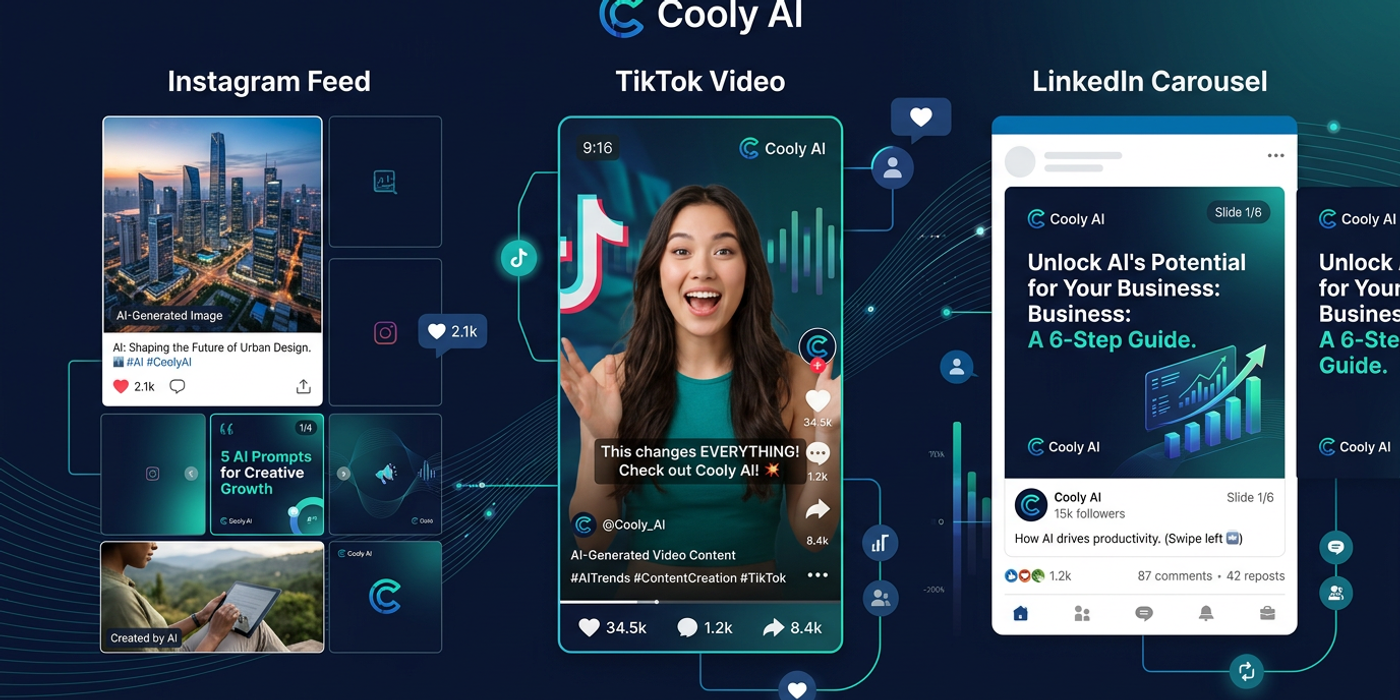
AI social media content evolved fast since July 2026. FLUX 3 Video, LTX-2.5, and GPT-Image-2 reshaped what HK brands create for social. Updated guide.
The AI model landscape shifted fast between July and late August 2026. FLUX 3 Video went GA with native audio, LTX-2.5 brought multi-shot video generation, GPT-Image-2 landed with built-in editing, and MiniMax H3 delivered video with native stereo audio. Each release changes what Hong Kong brands can produce for social media.
This updated guide covers what's new, platform changes, and strategy adjustments for late 2026.
What New AI Models Mean for Social Media Content
Three model releases since July changed the social media content game for Hong Kong creators.
FLUX 3 Video — Black Forest Labs' video model went GA in late July, bringing consistent 20-second clips with native audio. A single prompt now produces a complete short-form video for TikTok, Instagram Reels, or YouTube Shorts. Hong Kong brands report 60% faster turnaround on short-form content.
LTX-2.5 — Lightricks' open-weight video model introduced multi-shot generation with 4K HDR. Generate sequential scenes that maintain visual continuity — a product demo showing three angles, or a mini-narrative across locations. For luxury Hong Kong brands, this is a step change from single-shot outputs.
GPT-Image-2 — OpenAI's image model brought native editing capabilities. You can now select a region in an existing image and regenerate it with a new prompt — no inpainting workarounds or external image editors needed. For social media managers producing carousels and infographics, this means polishing an image asset takes seconds instead of context-switching to Photoshop.
MiniMax H3 — This omni-modal video model generates video with native stereo audio. One prompt produces a talking-head clip with lip-synced voice and background music baked in. It handles Cantonese better than earlier video models, making it especially useful for HK brands.
Platform Policy Changes Since July
The major social platforms have updated their approach to AI content since mid-2026.
Instagram and Facebook tightened labelling requirements in August. Any realistic AI-generated content — images or video that could pass as authentic — now requires an explicit "Made with AI" label. Stylised or artistic content is exempt, but the threshold is lower than before. Brands should default to labelling if there is any doubt.
TikTok updated its Symphony suite with direct integration for third-party AI video models. You can now upload FLUX 3 Video or LTX-2.5 output directly to TikTok's creative tools without format conversion. The platform also introduced an AI content registry: creators who consistently label AI content get preferential Explore page distribution.
LinkedIn rolled out an AI disclosure badge for posts generated with AI writing or image tools. Early data shows labelled posts maintain the same engagement as unlabelled ones, suggesting the professional audience cares more about content value than how it was produced.
YouTube updated its AI content policy in early August. Content that could mislead viewers now requires a disclosure label. Educational AI content — explainers, tutorials — is exempt. The algorithm continues to favour AI explainer content.
Winning AI Content Formats in Late 2026
Some content formats have pulled ahead of others since July.
AI video loops — Short, seamless video loops generated by FLUX 3 Video and Seedance 2.5 are outperforming static images on Instagram and TikTok. Brands report 2-3x higher engagement on looping product videos compared to static product images.
Multi-shot product showcases — LTX-2.5's ability to generate sequential scenes means brands can show a product from multiple angles in a single social post. This is driving strong performance in Hong Kong's luxury retail and FMCG sectors.
AI-generated talking-head avatars — More brands are using AI avatars for social content, especially for Cantonese-language videos where hiring talent for every piece of content is cost-prohibitive. The quality gap between AI avatars and real recordings has narrowed significantly since mid-2026.
Interactive carousels — GPT-Image-2's editing lets brands produce carousels with consistent styling across slides. Educational content and step-by-step guides benefit most.
Updated Strategy for Hong Kong Brands
The core strategic advice from July still holds — AI content is a tool to scale creativity, not replace it. But three tactical shifts are worth making for late 2026.
First, invest in video-first production. With FLUX 3 Video and LTX-2.5 producing social-ready output, the cost-per-video has dropped below the cost-per-image for many brands. Rethinking content calendars around short-form video rather than static images unlocks higher engagement.
Second, build around multi-model workflows. The best social content in late 2026 doesn't rely on a single model. A typical workflow: generate the visual concept in GPT-Image-2, extend it to video in FLUX 3 Video, add voiceover from Cartesia Sonic-3.6, and publish across platforms. Cooly Studio integrates these steps into a single interface.
Third, label proactively. Platform policies are trending toward stricter disclosure. Brands that adopt transparent labelling now build trust that pays off when regulations tighten. A "Made with AI" note in the caption costs nothing.
The Bottom Line for Late 2026
AI social media content has moved from experiment to core strategy. Model releases since July closed most quality gaps — native audio video, multi-shot consistency, built-in editing, and better language support. For Hong Kong brands, the question is how to build the most efficient pipeline, not whether to use AI.
Frequently Asked Questions
Q: Should I still use AI image generation for social media, or switch entirely to video? A: Both have their place. Use static images for e-commerce catalogues and LinkedIn. Use video for Instagram, TikTok, and YouTube Shorts where motion drives engagement.
Q: Does labelling content as AI-generated hurt reach? A: Current data across platforms shows no engagement penalty for labelled AI content. Audiences care about value, not the production method.
Q: Can I use a single AI model for all my social media content? A: Not effectively. Each model has different strengths — FLUX 3 Video for clips, GPT-Image-2 for edited images, LTX-2.5 for multi-shot sequences. A multi-model workflow outperforms a single-tool approach.
Q: How do I handle Cantonese-language AI content for social media? A: MiniMax H3 and Cartesia Sonic-3.6 handle Cantonese well. For text content, use bilingual prompting in Cooly Studio.
Q: Are AI-generated social media posts copyright-safe for commercial use? A: FLUX 3 Video, Stable Diffusion, and GPT-Image-2 offer commercial licensing. Always check individual model terms — some free models restrict commercial use.
Q: How much time can AI realistically save a Hong Kong social media team? A: Early adopters report 50-70% reduction in content production time. A campaign that needed two weeks of production now completes in three to four days with AI.
Q: What's the biggest mistake brands make with AI social content in 2026? A: Producing generic, brandless content. The winning approach combines AI speed with strong brand identity — Hong Kong cultural references, Cantonese language, and local visual cues.