A practical guide for Hong Kong agencies on pitching, scoping, and delivering AI video projects — from client education to final workflows in late 2026.
AI video has moved from experiment to expectation for Hong Kong creative agencies. But there is a gap between having the tools and winning the work. The agencies pulling ahead know how to pitch, scope, and price AI video in a way that builds client confidence and protects margins.
This guide covers the client-facing side of AI video that the earlier posts on agency workflows and industry ROI did not address: how to sell it, scope it, and deliver it without losing your shirt.
The Pitch: Why Clients Need AI Video Education First
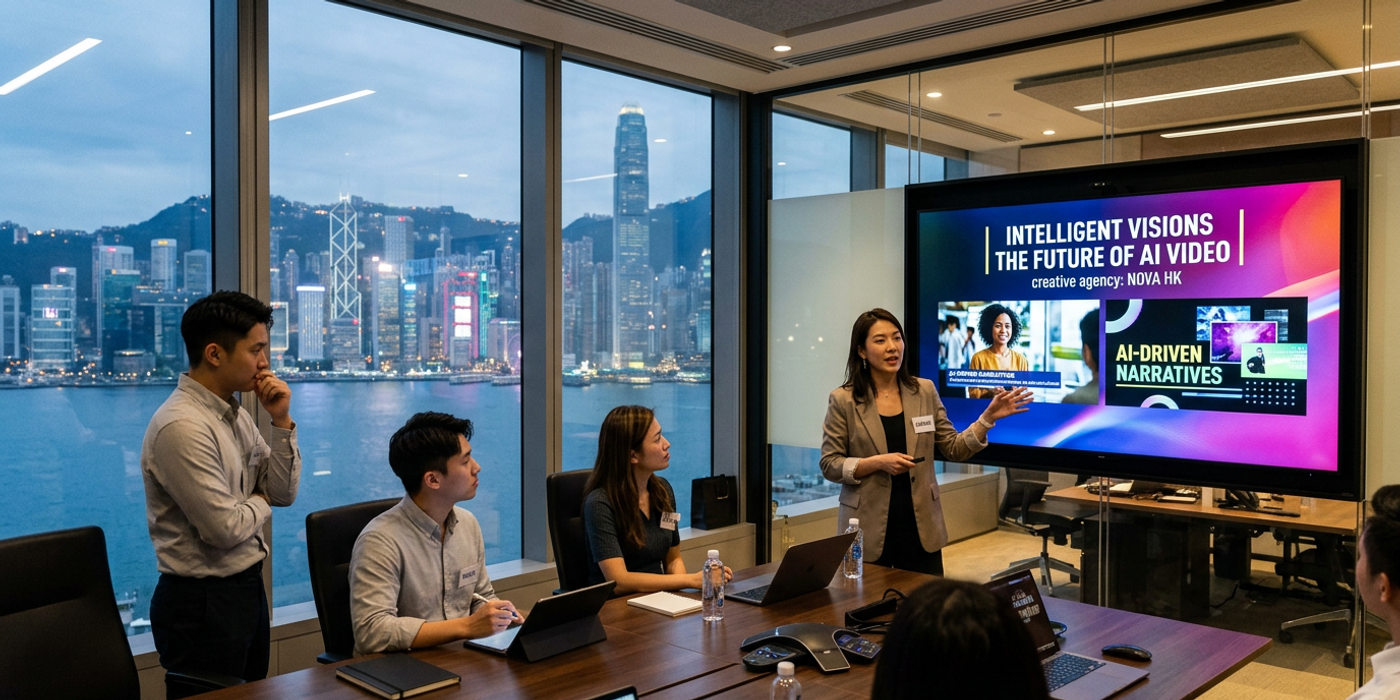
Most Hong Kong brand managers still think AI video means typing a sentence into a text box and getting a finished ad. The pitch is not about the technology — it is about managing expectations. Agencies that win the most AI video work in late 2026 spend the first 15 minutes of every pitch showing real before-and-after production pipelines, not raw AI outputs.
The key distinction to make early: AI video is a production methodology, not a magic button. Walk clients through a typical five-stage process — brief, concept development, AI generation, human post-production, and delivery. When clients see every clip passes through editorial, sound, and brand review, perceived risk drops and value rises.
Scoping the Work: Three Pricing Models for AI Video
Hong Kong agencies in late 2026 use one of three pricing structures for AI video, depending on the client and project type:
Fixed-scope project fee. Best for repeatable formats — social media cutdowns, product demos, event recaps. The agency commits to a specific number of clips, deliverables, and revisions. The AI tooling reduces the generation cost, but the scope should account for curation time (typically 3–5× more AI clips generated than delivered).
Hourly or day-rate consulting. Works for exploratory projects where the client wants to test AI video without a long commitment. The agency provides access to its AI video pipeline, a producer oversees the output, and the client pays for the time spent. This model works well for HK advertising clients who want to "try before they buy" a retainer.
Retainer with monthly clip allocation. The emerging standard for ongoing brand content. A monthly retainer covers a fixed number of AI-generated video assets, with a defined revision cycle and SLA. The retainer model rewards agencies that have standardised their AI video pipelines, since the per-clip cost drops as volume increases.
Client Review Cycles: The Revision Trap
The single largest margin killer in AI video production is uncontrolled revision cycles. Because AI generation feels fast and cheap — click a button, get a new clip — clients naturally request more iterations than they would for traditional production.
Smart HK agencies set revision limits upfront: two rounds of significant changes per clip, with additional iterations billed at a defined rate. They also batch their revision requests rather than processing them one by one, which improves model consistency and reduces context-switching overhead.
The second trap is "client prompt engineering" — when brand managers bypass the agency creative team and generate their own clips using the agency's tools. Set clear separation: the agency owns the prompt library and model configurations, and the client provides direction, not direct tool access.
Delivery Standards: What Hong Kong Brands Expect
By late 2026, Hong Kong brands expect AI video to meet three delivery standards before they sign off:
Brand-consistent output across every clip. The same colour grade, typography system, and audio identity that applies to traditional video must apply to AI-generated footage. Agencies that treat AI clips as standalone assets lose the consistency argument in brand reviews.
Platform-optimised exports. A 16:9 clip for a TVC reel will not work for a 9:16 HK MTR digital panel or a 1:1 Instagram carousel. Deliver the full platform matrix upfront — the client should never have to ask for a format crop.
Human-supervised audio. AI-generated voiceover and sound effects have improved significantly in 2026, but every HK agency we spoke to overlays their own audio post-production. Clients notice when the audio sounds generically synthetic. A quick pass through EQ, compression, and room tone matching separates professional delivery from amateur output.
Building the AI Video Portfolio
The most effective way to win new AI video clients in Hong Kong is a tight portfolio of three to five case studies, each showing the same three-part structure: the brief, the AI-assisted production pipeline, and the final branded output. Prospective clients do not want to see raw AI clips — they want to see finished work that fits their own brand landscape.
Include one speculative or "white-label" concept per pitch, generated specifically for the client's sector. A property developer pitch gets a speculative 30-second AI video of a luxury show flat walkthrough. An F&B pitch gets a fast-paced product sequence with animated typography. The speculative piece demonstrates not just technical capability but strategic thinking — and it is the single highest-converting tactic in the HK agency AI video playbook.
Frequently Asked Questions
Q: How do we price AI video against traditional video for bitesize social content? A: Price at 60–70% of the traditional rate initially, then adjust once you have production data. The margin comes from volume and pipeline efficiency, not per-clip premium pricing.
Q: Should we offer AI video as a standalone service or bundled with traditional production? A: Both. Standalone packages attract cost-conscious clients. Bundled offerings (AI moodboards + filming + AI post-production) command higher retainers.
Q: What is the biggest mistake agencies make when pitching AI video in Hong Kong? A: Leading with technology rather than outcome. Clients care whether the video sells their product, not which model you used. Pitch the result, reference the process only when asked.
Q: How do we handle data privacy and IP when using AI for client projects? A: Use providers with clear IP indemnification and never train on client assets without written consent. Most Hong Kong brands now require an AI usage rider in the SOW that covers data handling, model choice, and output ownership.
Q: How many AI video clips do we need to show in a typical pitch deck? A: Three to five finished examples plus one speculative piece. More than five dilutes the impact; fewer than three looks like you are still learning the tools.
Q: What post-production skills do we need in-house for AI video work? A: Editorial, colour grading, sound design, and motion graphics. AI replaces the camera — not the craft that makes video professional.
Q: How do we handle rushed deadlines when the AI model produces unexpected results? A: Maintain a model rotation. When one model underperforms, switch to a fallback immediately. Every HK agency should maintain a current comparison chart of which model handles which type of content best, and test it weekly.
Q: What is the minimum viable AI video setup for a mid-size HK agency in late 2026? A: A text-to-video model, an image-to-video model for brand assets, a voice tool, and a licensed music library. Budget roughly HKD 12,000–18,000 per month in tooling for a team of three to four producers.